
How to Win in Tampa Bay's $400K–$800K Market: A Buyer's Negotiation Playbook for 2026
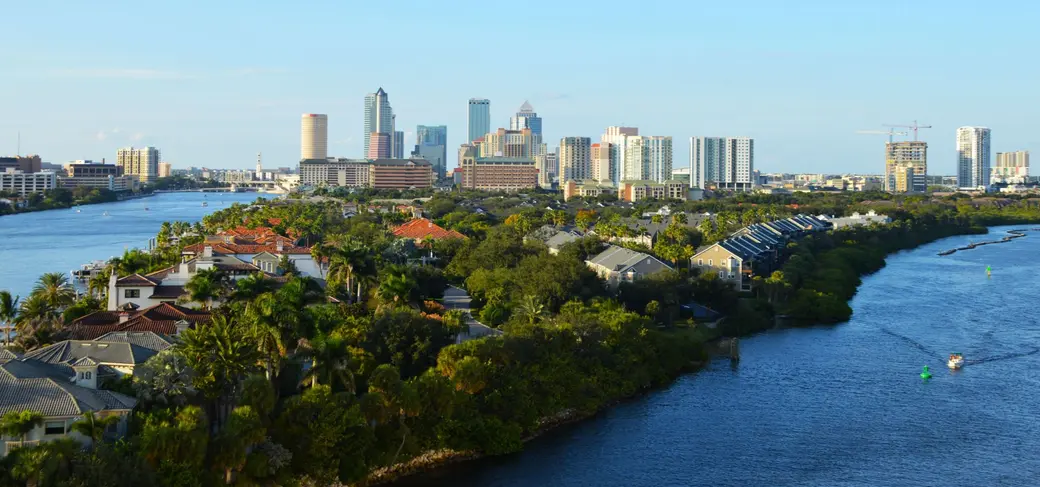
If you've been watching the Tampa Bay housing market for the past few years, you know the rules have changed. The frantic bidding wars of 2021 and 2022, where buyers waived inspections, skipped appraisals, and wrote love letters to sellers just to get a foot in the door, are largely behind us. In 2026, buyers in the $400,000 to $800,000 range have something they haven't had in nearly five years: leverage.
But leverage is only useful if you know how to use it. Many buyers come to the table assuming the market is the same as it was six months ago, or worse, they read national headlines about a "crashing market" and try to lowball every offer, only to lose the home to someone better prepared. The truth sits somewhere in the middle, and it varies street by street across Hillsborough, Pinellas, and Pasco counties.
This week, we're breaking down exactly how to negotiate in today's Tampa Bay market, where to push, where to compromise, and how to structure an offer that actually closes.
The 2026 Tampa Bay Market in Plain English
Before we get into negotiation tactics, you have to understand the playing field. Tampa Bay has shifted from a runaway seller's market into something much closer to balance. A few key data points are shaping every conversation between buyers and sellers right now:
- Inventory is up significantly. Active listings have climbed to a multi-year high, with roughly five to six months of supply across much of the metro. That's the textbook definition of a balanced market.
- Days on market have stretched. Homes are sitting an average of 45 to 67 days, compared to the 10-day flips we saw at the peak. Overpriced listings sit even longer.
- Prices have softened modestly. Hillsborough County's median is hovering near $408,000, with year-over-year prices down a few percent in many submarkets. Pinellas waterfront is mixed, and Clearwater has seen some of the sharpest corrections.
- Mortgage rates remain elevated. Thirty-year fixed rates are hovering in the 6.3% to 6.8% range, which is shaping how much house buyers can actually afford.
What does all this mean for someone shopping in the $400K to $800K range? It means sellers are increasingly motivated, especially those who priced their home based on what their neighbor got two years ago. It also means you have time to think, time to inspect, and room to negotiate, three things that simply did not exist in this market eighteen months ago.
Step 1: Get Your Financing House in Order Before You Negotiate Anything
The single biggest mistake I see buyers make is showing up with a pre-qualification letter instead of a full pre-approval, or worse, a verbal "I talked to my lender." In a balanced market, sellers have time to compare offers, and the strength of your financing is often more persuasive than an extra few thousand dollars on the price.
Here's what a strong financial position looks like in 2026:
- A fully underwritten pre-approval, not just a pre-qualification. These are sometimes called "TBD pre-approvals" because the only blank field is the property address. Lenders have already reviewed your income, assets, and credit.
- Proof of funds for your down payment and closing costs, dated within the last 30 days.
- A local lender relationship, not just an online quote. Tampa-area sellers and listing agents trust local lenders to actually close on time, and they will weigh that.
If you're stretching toward the upper end of your range, a $750,000 or $800,000 home, also know that the 2026 conforming loan limit jumped to $832,750. That means you may not need a jumbo loan even on a higher-priced purchase, which can save you a meaningful amount on rate and underwriting friction.
Step 2: Understand the Seller Before You Make an Offer
Negotiation is psychology before it is math. Before you write a single number on a contract, your agent should be digging into the seller's situation:
- How long has the home been on the market? Anything past 45 days in Tampa Bay right now signals a motivated seller. Past 90 days, and they are likely staring down a price reduction.
- Has it had price reductions already? Each cut is information. A home that has dropped twice is telling you the seller is willing to negotiate further.
- Why are they selling? Job relocation, divorce, downsizing, estate sale, and "we already bought the next house" all suggest urgency. Sellers who don't have to move will not negotiate the same way.
- Are there carrying costs piling up? Florida property taxes, HOA fees, and insurance premiums on a vacant home add up fast. Every month a seller owns an empty house, their motivation grows.
Your agent can usually pull most of this from the MLS history, public records, and a friendly phone call to the listing agent. The information is out there, and using it is fair game.
Step 3: Build the Offer Around Total Cost, Not Just Price
Here's where most buyers leave money on the table. They obsess over knocking $15,000 off the asking price and ignore that they could potentially save twice that through other levers. In the $400K to $800K range, the most powerful negotiation tools right now are not price reductions, they are concessions.
Rate Buydowns: The Most Underused Tool in 2026
Ask the seller to credit you 2% to 3% of the purchase price toward closing costs and an interest rate buydown. On a $600,000 home, that's $12,000 to $18,000 you can use to permanently lower your rate, sometimes by a full point or more, or to set up a 2-1 temporary buydown that gives you breathing room in the first two years of homeownership.
Why does this work better than a price cut? A $15,000 price reduction saves you about $90 per month. A $15,000 rate buydown can save you $200 to $300 per month for the life of the loan. Sellers often agree because their net proceeds change very little either way, and the home moves.
Closing Cost Credits
Sellers can typically contribute up to 6% of the sales price toward your closing costs on a conventional loan with less than 25% down, and 3% on investment properties. In Tampa Bay, where closing costs commonly run 2% to 3% of the purchase price, this can effectively erase that line item from your budget and free up cash for moving, furniture, or hurricane shutters.
Repair Credits Instead of Repairs
After your inspection comes back, resist the urge to demand the seller fix everything. In Florida, where roof age, HVAC condition, and plumbing issues are common in homes built before 2010, it is almost always better to ask for a credit at closing rather than have the seller do the work. You control the contractor, the quality, and the timeline. The seller, motivated to close, often prefers writing a check to managing repairs.
Step 4: Don't Skip the Florida-Specific Due Diligence
Tampa Bay is not Ohio, and it is not Phoenix. There are inspection items here that will absolutely affect your negotiation, and ignoring them is how buyers end up with $30,000 surprises a year after closing.
- Four-point inspection. Required by most insurers for homes 20 years or older. This covers roof, electrical, plumbing, and HVAC, and any of those four can blow up your insurance quote.
- Wind mitigation inspection. Often saves you money on insurance if the home has hurricane straps, a newer roof, or impact windows. Always do it.
- Flood zone verification. Pull the FEMA flood map yourself and ask whether the home is in an A or V zone. The post-Helene and post-Milton landscape has reshaped insurance pricing across coastal Pinellas and Hillsborough.
- Roof age and material. Many Florida insurers won't write policies on roofs older than 15 years, regardless of condition. If the roof is 12+ years old, that's a negotiating point.
- Sinkhole disclosure. Sellers are required to disclose, but you should still ask for any prior insurance claims and check the property's history in the county records.
Step 5: Match Your Strategy to the Neighborhood
Tampa Bay is not one market. It's dozens of micro-markets, each behaving differently. Your negotiation approach should adjust accordingly:
Tighter Markets (Be Reasonable)
South Tampa (Hyde Park, Palma Ceia, Bayshore Beautiful), Westchase, parts of Wesley Chapel, and well-located St. Pete neighborhoods are still seeing strong demand. Inventory is limited, school zones drive premiums, and aggressive offers will lose. In these areas, expect to pay close to asking on well-priced homes, but you can still negotiate concessions and credits if you write a clean, fast offer.
Balanced Markets (Push Politely)
Riverview, Brandon, Apollo Beach, much of New Tampa, and most of Pasco County are sitting in true balance. Homes that have been listed 30+ days are open to negotiation. Targeting 3% to 5% under asking, plus seller-paid concessions, is reasonable.
Soft Markets (Negotiate Hard)
Coastal Pinellas (especially Clearwater), Manatee County's luxury segment, and any home with insurance, flood zone, or condo-specific issues are buyer's markets right now. Homes sitting 60+ days and condos with rising HOA fees or special assessments are where you can realistically push 7% to 10% under asking, plus significant concessions.
Step 6: Write the Offer That Actually Wins
Putting it all together, here is what a competitive 2026 Tampa Bay offer looks like in the $400K to $800K range:
- Strong pre-approval letter from a local lender, attached to the offer.
- Realistic price based on actual comparable sales in the last 90 days, not the listing price.
- Reasonable earnest money deposit, typically 1% to 2% of the purchase price.
- A 10 to 15 day inspection period, long enough to do all of the Florida-specific inspections and get an insurance quote.
- Financing and appraisal contingencies, kept in place. This is not the market to waive them.
- A specific concession ask, framed as helping the deal close: a rate buydown, closing cost credit, or repair credit.
- A reasonable closing timeline, typically 30 to 45 days. Faster if you can, since speed is its own form of negotiation.
What you should not do: waive inspections, skip the appraisal contingency on a financed offer, or make a "take it or leave it" lowball that doesn't leave room for the seller to counter. Negotiation is a conversation, not an ultimatum.
The Bottom Line for Tampa Bay Buyers
The 2026 market rewards prepared, patient buyers. If you walk in with strong financing, do real homework on the seller's situation, focus on total cost rather than just sticker price, and respect the Florida-specific risks that drive this market, you can land a home in the $400K to $800K range on terms that would have been unthinkable two years ago.
The opportunity is real. So is the complexity. Insurance, flood zones, roof ages, HOA fees, and rapidly shifting micro-markets mean that the difference between a great purchase and a regrettable one often comes down to local knowledge and a steady negotiating hand.
If you're shopping Tampa Bay this spring, take your time, run the numbers carefully, and remember: you're not just buying a house, you're buying everything that comes with it. The right strategy makes that distinction work in your favor.
Thinking About Buying in Tampa Bay?
Let's talk strategy before you write your first offer. Schedule a no-pressure buyer consultation and get a custom game plan for your price range and target neighborhoods.
Categories
Recent Posts



State Designated Broker License ID: BK3419257
+1(813) 245-9524 | stephanie@yrealtyinc.com